Children are not small adults
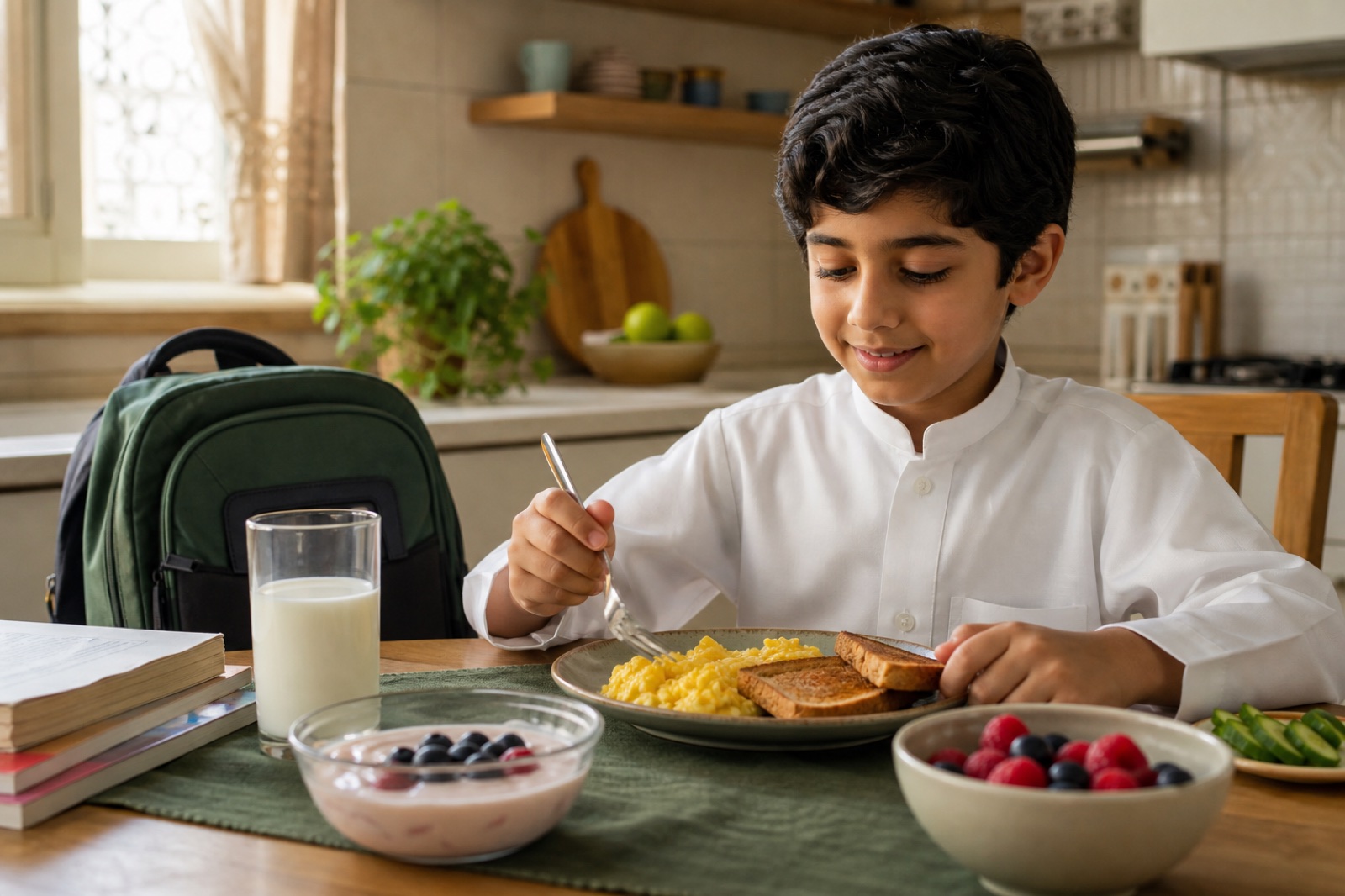
Appetite can change with age, activity, sleep, growth and even the timing of the previous meal. Begin with a modest balanced portion and make more available when the child is still hungry.
This reduces pressure and food waste while giving children practice noticing hunger and fullness cues.
Build the plate in parts
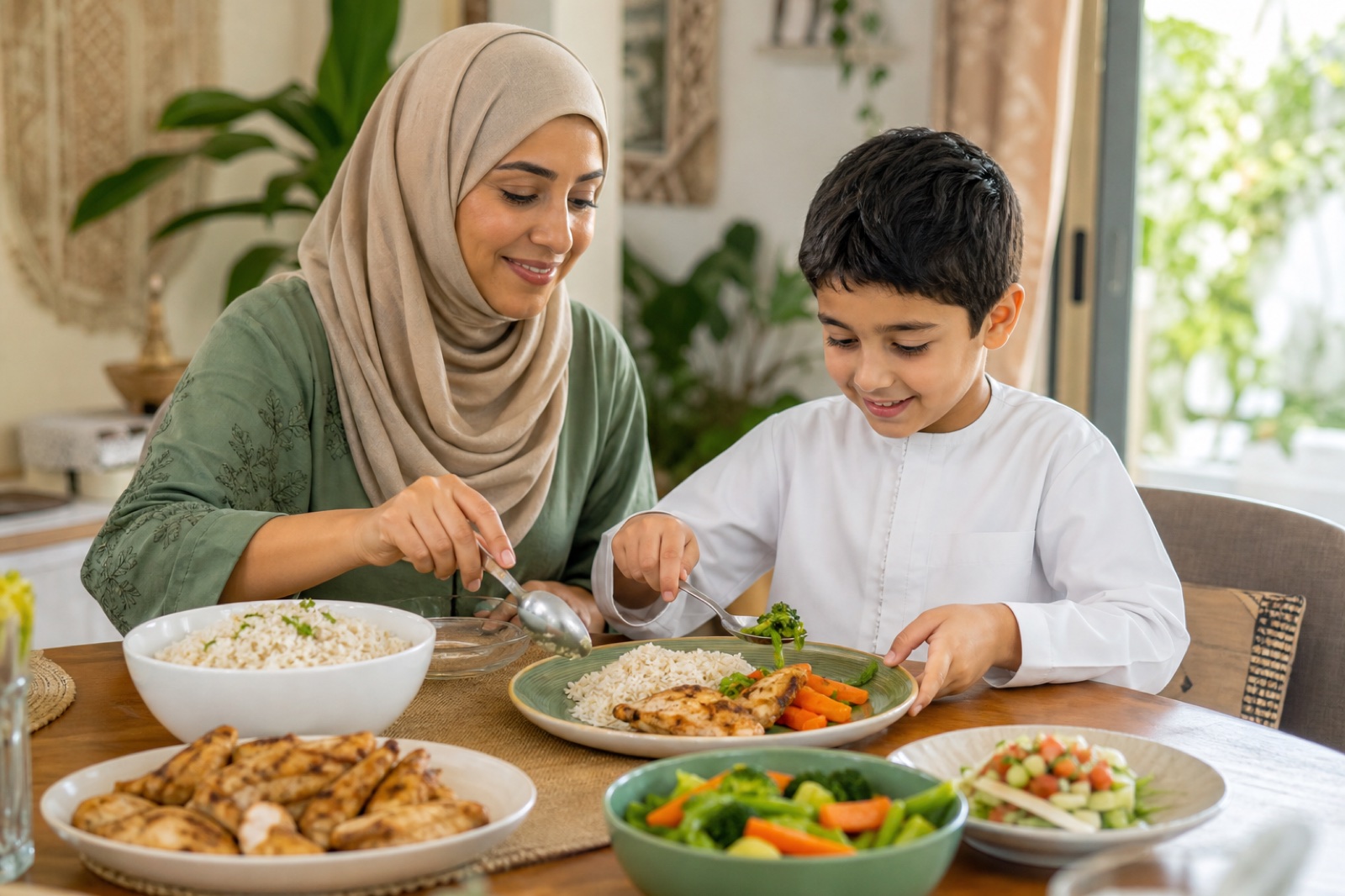
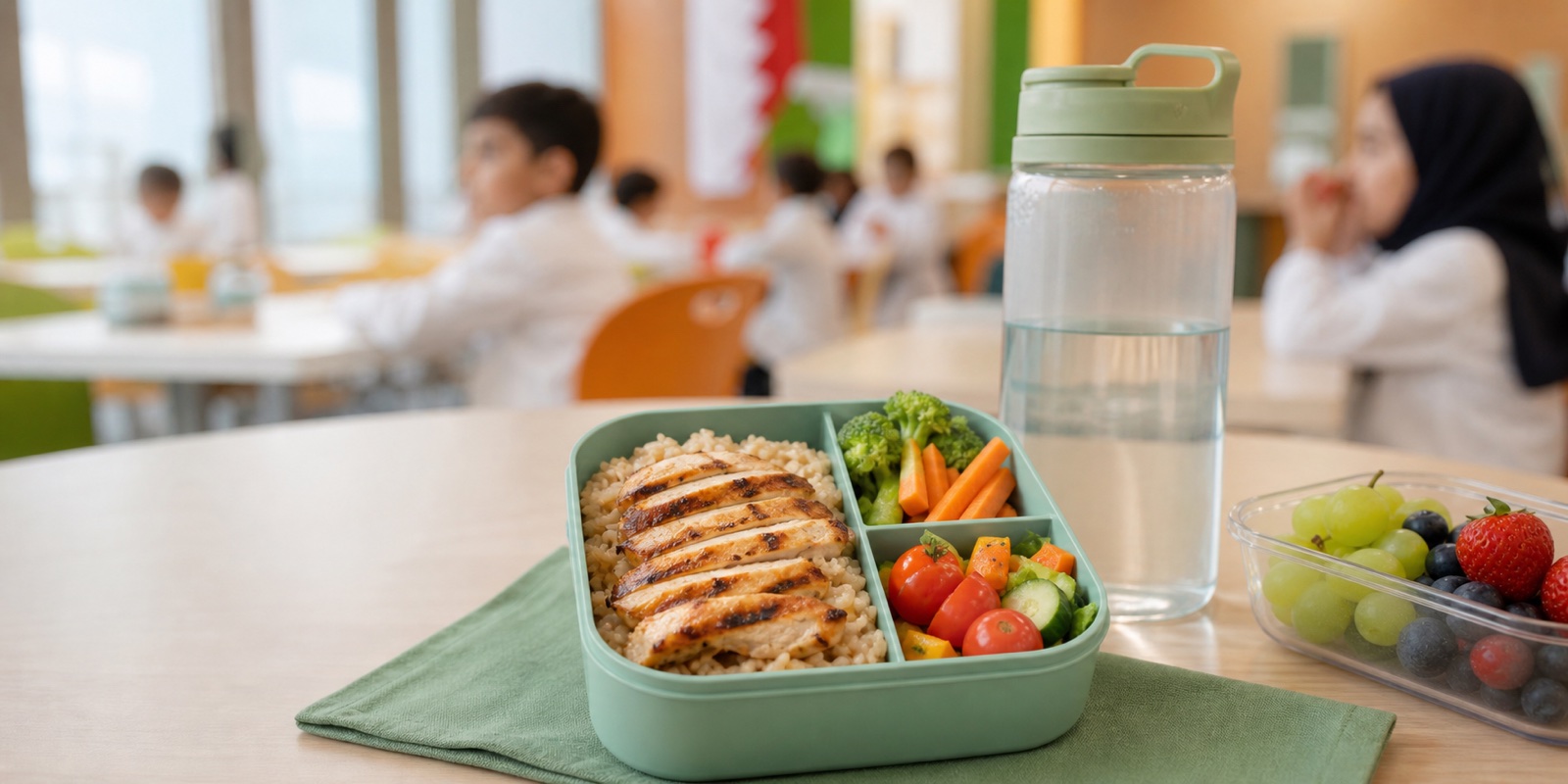
Include a protein food, a grain or starchy food, and vegetables or fruit. The exact balance will look different across meals, and that is normal. What matters is the pattern over time, not perfect geometry on every plate.
Respond without pressure
Adults decide what, when and where food is offered. Children can decide whether and how much to eat from what is available. Calm exposure supports learning better than bargaining, forcing or demanding a clean plate.
Please remember: For diagnosed allergies, medical conditions or individual nutrition concerns, follow guidance from a qualified healthcare professional and your school's official care process.